
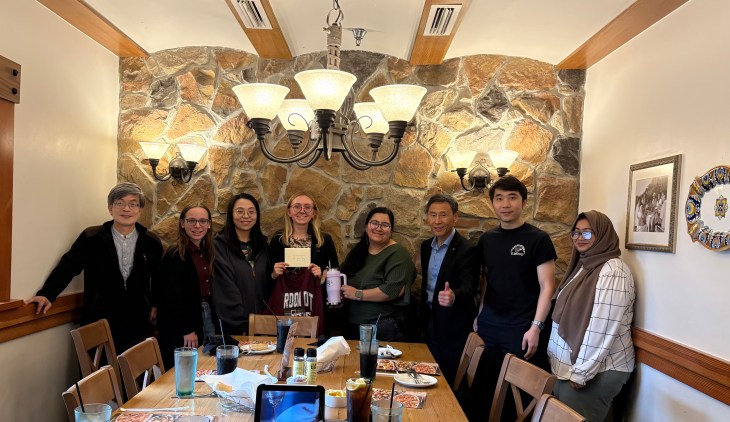
Celebrating Veronica Kowalewski’s Fall 2025 graduation at Olive Garden with the group 🎓 We’re so proud of all she’s accomplished and wish her the very best as she heads into the next chapter of grad school! 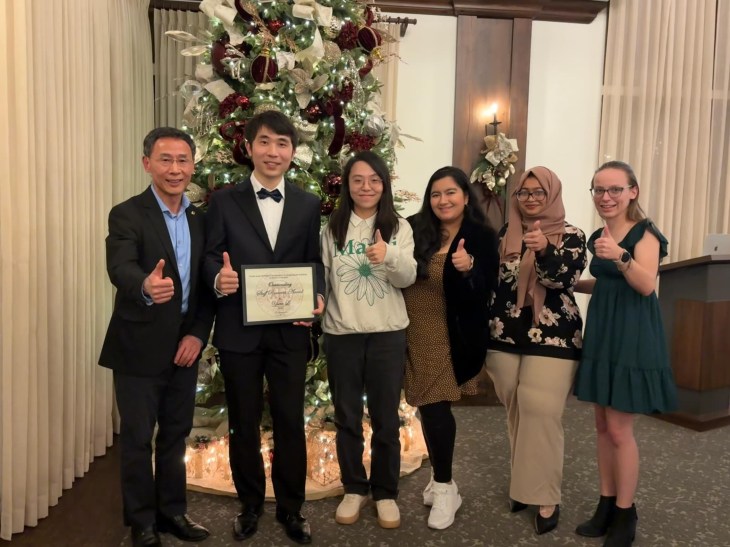
ATMO Holiday Party, 2025🎄Celebrating the season and congratulating Yixin Li, our outstanding research scientist, for winning the Department Staff Research Award! 
Dr. Michael Young, 2017 Nobel Laureate in Physiology or Medicine, visits our lab for a day of collaboration, discussion, and discovery. 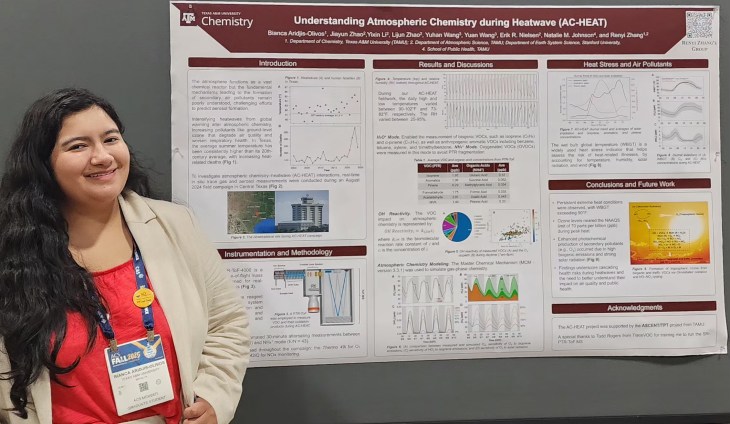
Group member Bianca Aridjis-Olivos presents a poster presentation about our AC-HEAT campaign during the Fall 2025 ACS Conference in Washington, DC. 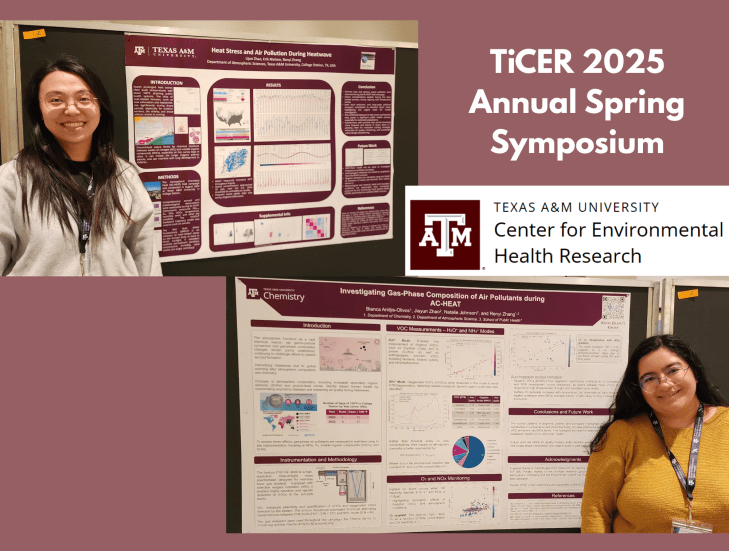
Group members Liijun Zhao and Bianca Aridjis-Olivos showcased their AC-HEAT research posters at the 2025 TiCER Spring Symposium 
Dr. Zhang’s acceptance speech for the Jule Charney Medal of American Meteorological Society 
Group Luncheon @ University Club – 11/20/2024 
Balloon Launch during our AC-Heat Campaign. The balloon collects meteorological data by weather balloon surroundings. 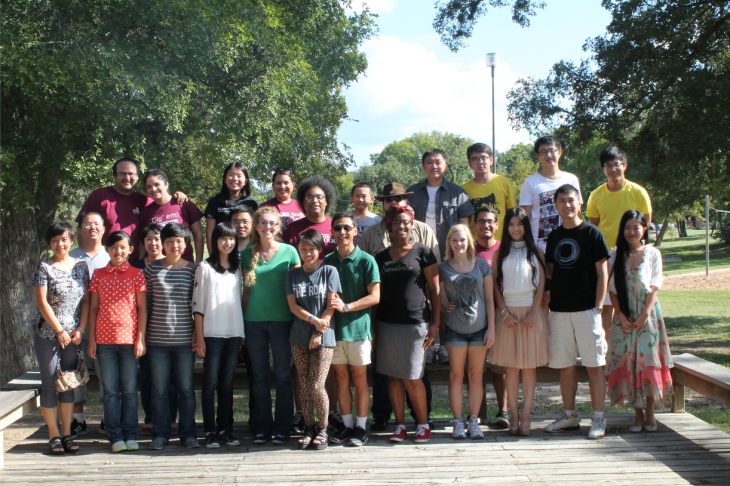
Group Photo 2016 
Building TD-ID-CIMS 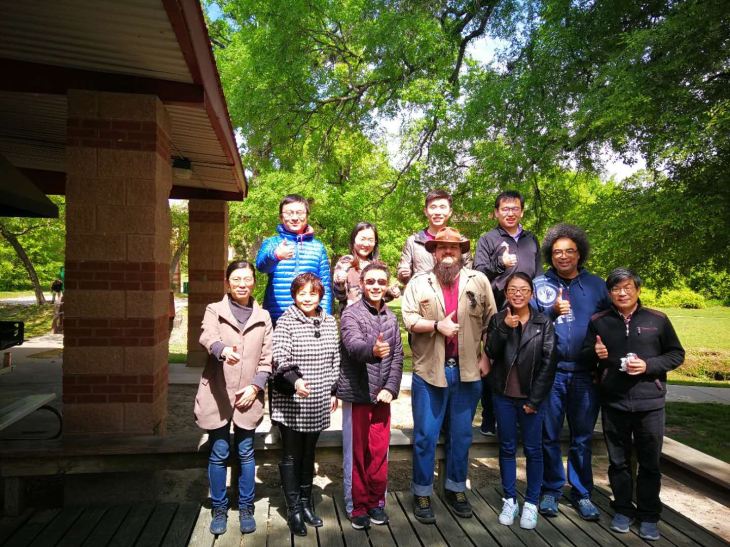
Group Photo 2019 
Winning Sigma Xi Outstanding Distinguished Scientist Award 
Devising lab Instrument 
Organizing the International Year of Chemistry (IYC) “Symposium on Stratospheric Ozone and Climate Change” in Washington, DC (November 7-10, 2011) 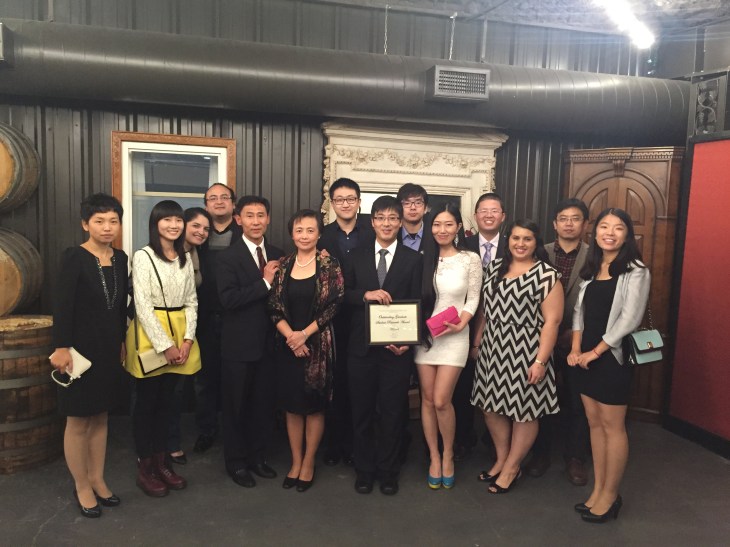
Group photo 2017 
Organizing 2016 AMS Mario J. Molina Symposium 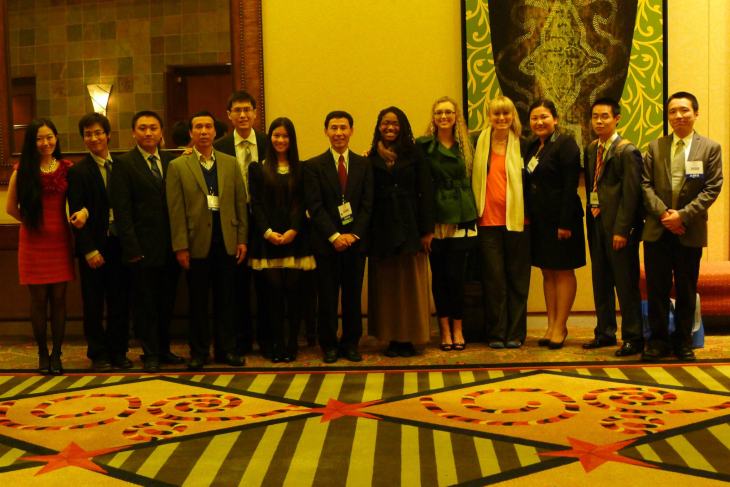
Group photo 2016 
Group Photo with Dr. Mario Molina 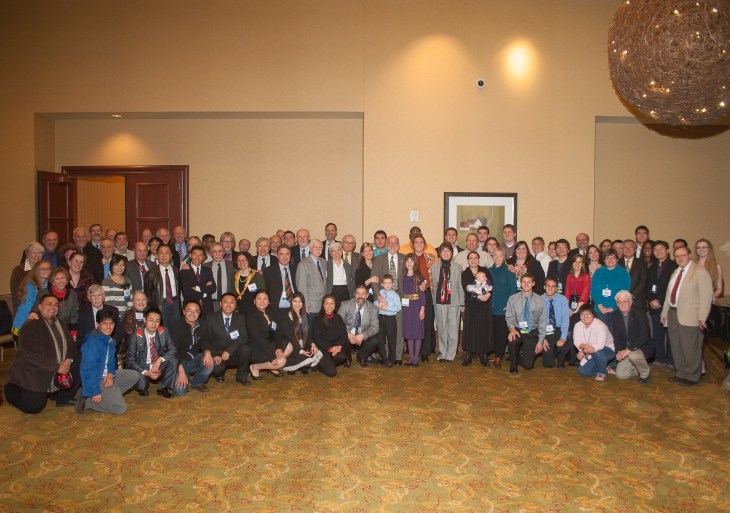
Oragnizing 2013 AMS Duce Symposium 
ACS Symposium in honor of Zhang 
Lab filming 
Photo with media crew 
Renyi Zhang is the holder of Harold J. Haynes Endowed Chair (2010-2024), Mr. and Mrs. James R. Whatley ’47 Chair in Geosciences (2024-present), and a University Distinguished Professor in the Departments of Atmospheric Sciences and Chemistry at Texas A&M University (TAMU). He earned a Ph.D. from MIT and completed postdoctoral research at the Jet Propulsion Laboratory/Caltech. Zhang is an elected Fellow of the American Association for the Advancement of Science (AAAS), the American Meteorological Society (AMS), and the American Geophysical Union (AGU).
Dr. Zhang was honored in 2016 with a named symposium “Formation & Transformation of Atmospheric Aerosols – From Air Pollution to Climate Change” at the National Meeting of the American Chemical Society. He received the Humboldt Research Award from the Alexander von Humboldt Foundation (2023), recognizing his “exceptional contributions to atmospheric science and climate research“. He is the recipient of the American Meteorological Society Jule G. Charney Medal “for exceptional contributions and leadership in advancing understanding of atmospheric chemical and physical mechanisms influencing air pollution, weather extremes, climate, and public health” (2025).
Research Interest
His research has covered a variety of areas in atmospheric, chemical, environmental, climate, and public health sciences, including:
- Photochemical oxidation of hydrocarbons from anthropogenic and biogenic emissions;
- Nucleation, growth, and transformation of aerosols;
- Development of state-of-the-art instrumentation to measure trace gases and aerosols in the atmosphere;
- Assessments of aerosol-cloud-climate interaction and adverse human health effects of air pollution and climate change.
His earlier research made important contributions to the understanding of stratospheric ozone depletion. His scientific endeavors have not only made breakthrough discoveries in these areas but have also provided insights into the impacts of anthropogenic activities on human health, ecosystems, and climate, which are critical to policy-making and mitigation for environmental and climate protections.
Researchers shall not claim their authority by labeling their specialty but shall make convincing arguments by presenting scientific evidence. “Scientists may depict the problems that will affect the environment based on available evidence, but their solution is not the responsibility of scientists but of society as a whole.”
– Mario J. Molina, 1995 Chemistry Nobel Laureate
Our Scientific Findings on COVID-19 Transmission
(Zhang et al. Proc. Natl. Acad. Sci. USA, 2020; Li et al. Sci. Total Environ. 2020)
Airborne Particulate Matter and Children’s Health
(Zhang et al. Thorax, 2021; Rychlik et al. Proc. Natl. Acad. Sci. USA, 2019; Wu et al. Proc. Natl. Acad. Sci. USA, 2019)
Air Pollution and Hurricane Harvey
(Pan et al. Geophy. Res. Lett., 2020)
In the News
- The Medical News: Prenatal ultrafine PM exposure has adverse effects on children’s health, development
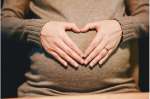 Particulate matter (PM) is a major component of air pollution that is increasingly associated with long-term consequences for the health and development of children.
 - CNN: School openings so far reveal science is right – masking works
 In some places where schools have been open for a while now, such as Georgia and Hawaii, public health experts notice what happens when schools follow the science: classes go on without disruption as long staff and students wear masks.
 - 2021 TAMU Chemistry Open House
 Two group members discuss our research between Hurricanes and Atmospheric Chemistry for the 2021 Chemistry Open House.
 - New Scientist: Air Pollution from chemical plants made Hurricane Harvey worse
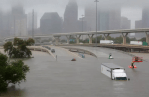 Air pollution can make the local effects of hurricanes worse, according to a study of 2017’s devastating Hurricane Harvey.
 - TAMU Hispanic Heritage Month 2021
 “Esperanza: A Celebration of Hispanic Heritage and Hope”. Mario J. Molina (1943-2020) – The Mexican-born Atmospheric Chemist and Nobel Prize Recipient and His Legacy with Texas A&M.
 - KBTX: Texas A&M study shows link between face masks and flattening COVID-19 curve
 A study conducted by Texas A&M professor and graduate student looked at the correlation between face mask mandates and COVID-19 case trends.
Recent Publications
- Radiative and microphysical impacts of the Saharan dust on two concurrent tropical cyclones: Danielle and Earl (2010). Pan et al., J. Geophys. Res. Atmos. 129, e2023JD039245 (2024). http://dx.doi.org/10.1029/2023JD039245
- Unexpected oligomerization of small α-dicarbonyls for secondary organic aerosol and brown carbon formation. Li et al. Environ. Sci. Technol. (2021)
- Gestational Exposure to Ultrafine Particles Reveals Sex-and Dose-Specific Changes in Offspring Birth Outcomes, Placental Morphology, and Gene Networks. Behlen et al. Toxicol. Sci. (2021)
- Air pollution and children’s health—a review of adverse effects associated with prenatal exposure from fine to ultrafine particulate matter. Johnson et al. Environ. Health Prev. Med. (2021)
- Multi-generation production of secondary organic aerosol from toluene photooxidation. Li et al. Environ. Sci. Technol. (2021)
- Assessing the Uncertainties in Ozone and SOA Predictions due to Different Branching Ratios of the Cresol Pathway in the Toluene-OH Oxidation Mechanism. Zhang et al. ACS Earth Space Chem. (2021)
- Carbenium ion-mediated oligomerization of methylglyoxal for secondary organic aerosol formation. Ji et al. Proc. Natl. Acad. Sci. USA (2020)
- Hygroscopicity of organic aerosols linked to formation mechanisms. Liu et al. Geophy. Res. Lett. (2020)
- An unexpected catalyst dominates formation and radiative forcing of regional haze. Zhang et al. Proc. Natl. Acad. Sci. USA (2020)
- Remarkable nucleation and growth of ultrafine particles from vehicular exhaust. Guo et al. Proc. Natl. Acad. Sci. USA (2020)
 Dr. Renyi Zhang's Group